


Blog
Getting Real Value from Dynamics 365 F&SCM: Smart ROI Strategies for UAE Retail Businesses
Written by
Vinay Punjabi /  April 30, 2026


Summary
As UAE retailers face rising complexity across compliance, seasonality, and omnichannel operations, the focus shifts from implementation to measurable value. This blog explores how Dynamics 365 Finance and Supply Chain Management helps retailers improve inventory accuracy, streamline compliance, and drive real ROI through smarter execution.
Dubai’s retail calendar never sleeps. Between Ramadan, Eid, DSF, DSS, and the Great Online Sale, UAE retailers are managing 18 major demand events in a single year, each one capable of exposing every crack in their operations.
Yet many retailers still lose revenue to stockouts during Eid, deal with inventory mismatches across Noon, Amazon.ae, and physical stores, and end up spending days manually reconciling VAT under an FTA that is tightening its requirements in 2026.
For many businesses, the challenge begins even earlier, at the evaluation stage of ERP decisions. Choosing a platform like Microsoft Dynamics 365 Finance and Supply Chain Management for retail is only the starting point. The crucial question is whether the implementation will yield anticipated returns.
Going live is not the finish line. In many cases, retailers struggle to translate implementation into a measurable business impact. This guide cuts through the noise to give you a practical, UAE-specific roadmap for extracting real value from Dynamics 365 Finance and Supply Chain Management.
- Why UAE Retail Demands a Different Kind of ERP (Not Generic)
- How Dynamics 365 Finance & Supply Chain Management Addresses the UAE Retail Problem
- The ROI Numbers – What the Data Actually Says
- Smart ROI Strategies for UAE Retail with Dynamics 365 Finance & Supply Chain Management
- Choosing the Right Dynamics 365 Finance & Supply Chain Management Implementation Partner in the UAE
- Final Thought
- FAQs
Why UAE Retail Demands a Different Kind of ERP (Not Generic)
If you have an ERP system designed for a traditional retail environment, you already know the problem. The UAE is not a traditional retail market.
1. Multi-Channel Complexity Is the Baseline, Not an Exception
A mid-sized UAE retailer typically manages four to six sales touchpoints at the same time, such as mall stores, dark stores, the Noon marketplace, Amazon.ae, a brand website or WhatsApp commerce. Each channel operates with its own inventory logic, fulfilment rules, and data flow.
An ERP that cannot unify this in real time is not just inefficient; it directly leads to revenue leakage through overselling, stock mismatches, and delayed fulfilment.
2. Customer Speed Expectations Are Extremely High
The UAE is not a “wait-and-see” consumer market. UAE consumers expect fast fulfilment and real-time availability across e-commerce and marketplace-driven shopping journeys.
This makes real-time inventory accuracy essential. End-of-day updates or batch syncing are no longer sufficient.
3. Seasonal Demand Spikes Break Conventional Planning
Events like Ramadan, Eid, and White Friday do more than increase sales volumes. They simultaneously stress:
- Inventory replenishment
- Returns processing
- Cross-channel allocation
A stockout on Noon during Eid is not just a missed transaction. It can:
- Damage seller ratings
- Trigger listing suppression
- Permanently shift customers to competitors
4. Compliance Is Now Real-Time, Not Periodic
This is where most ERP narratives underplay reality.
In 2026, UAE tax compliance is moving into real-time reporting through the FTA’s e-invoicing mandate, based on a Peppol five-corner model. Invoice data must flow through Accredited Service Providers to the Federal Tax Authority almost instantly.
Key requirements:
- Businesses with AED 50M+ revenue must appoint an Accredited Service Provider by 31 July 2026.
- Mandatory go-live begins on 1 January 2027
- Non-compliance penalty: AED 5,000 per month
For high-volume retailers, ERP systems that do not integrate natively with this framework become a compliance risk, not just an operational gap.
5. Multi-Entity Structures Add Another Layer of Complexity
Many UAE retailers operate across mainland entities and free zone entities. Each comes with different VAT treatments, invoicing rules, and reporting requirements.
At scale, managing this through spreadsheets or disconnected systems is no longer viable.
How Dynamics 365 Finance & Supply Chain Management Addresses the UAE Retail Problem
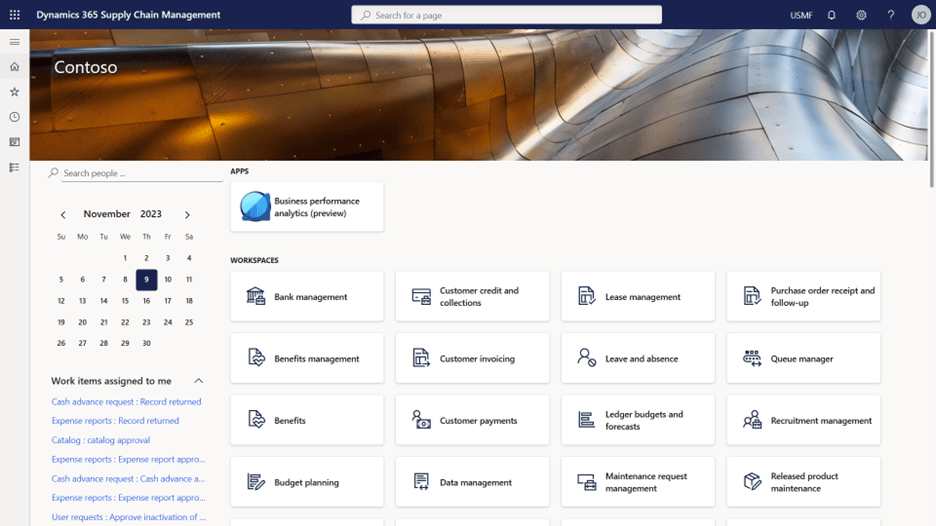
Here is what Dynamics 365 Finance and Supply Chain Management actually covers, and how each capability maps to real operational gaps in UAE retail.
The Finance Module: Beyond Bookkeeping
The Finance module handles general ledger, accounts payable and receivable, cash flow forecasting, automated bank reconciliation, and multi-currency management.
For UAE importers sourcing from India, China, Turkey, and Europe simultaneously, multi-currency is not a nice-to-have. It is a daily operational requirement. D365 handles this natively, reducing the need for manual conversions and reconciliation workarounds.
On the compliance side, the system is designed to integrate with Accredited Service Provider-based e-invoicing frameworks, enabling structured invoice exchange aligned with emerging FTA requirements. This becomes increasingly relevant as UAE e-invoicing regulations evolve toward real-time reporting.
When actual financial results differ from predictions, Microsoft Copilot in D365 Finance can help identify issues and point out possible reasons like changes in currency values or differences in when revenue is recorded. It makes it easier to explain these differences without much manual work.
The Supply Chain Management Module: Inventory That
Reflects Reality
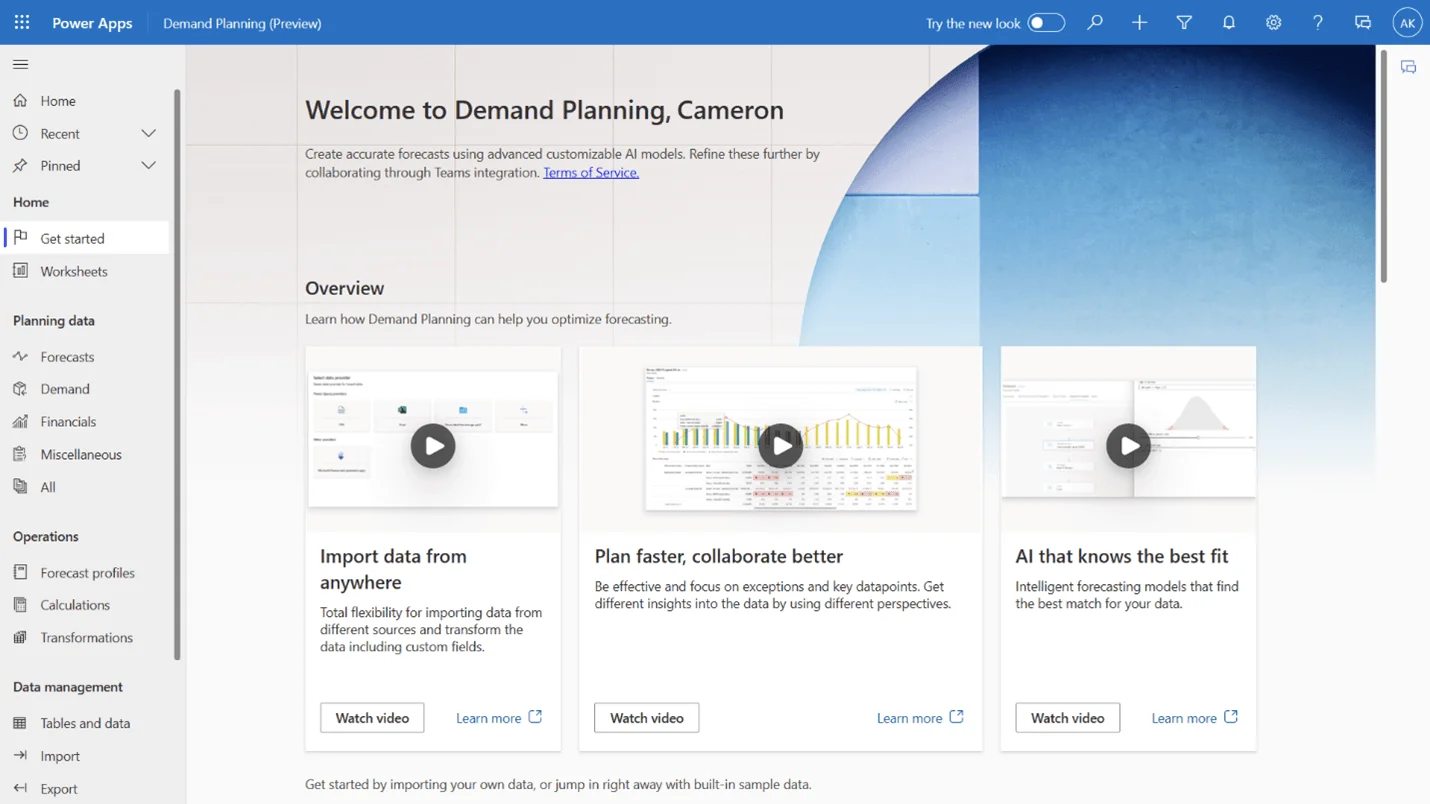
The SCM module covers demand forecasting, warehouse management, vendor management, procurement automation, and real-time inventory visibility.
For retailers managing stock across Noon,Amazon.ae, and multiple physical locations, the inventory visibility capability provides a real-time view of stock across channels, reducing reliance on delayed or batch-updated data.
This is what helps prevent scenarios like Eid stockouts, where demand spikes across channels simultaneously and inventory mismatches lead to lost revenue.
AI-enabled demand planning helps spot trends in past data, like seasonal changes and shifts in product demand, which leads to better decisions about restocking.
The Connective Tissue: One Data Layer, Not Two Systems
The key value of Dynamics 365 F&SCM lies in its unified data model. When a customer returns an online purchase in-store, the inventory adjustment, refund, and customer record are updated within the same system without batch reconciliation delays.
Similarly, merchandising and finance teams work from a single source of truth across all channels, eliminating the need to reconcile multiple spreadsheets or disconnected system reports.
For finance teams spending weeks on monthly inventory reconciliation, this unified layer is often where operational efficiency gains begin.
The ROI Numbers – What the Data Actually Says
A Forrester Total Economic Impact study commissioned by Microsoft found strong financial outcomes for organisations using Dynamics 365 ERP, based on composite retail and wholesale models.
Key findings from the study:
- ~101% ROI (enterprise ERP composite model)
- ~16-month payback period (midmarket ERP scenario)
- $12.9M net present value (enterprise model)
These figures reflect outcomes across full ERP deployments, where finance and supply chain management operate as part of a unified system rather than isolated modules.
What midmarket organisations typically experience
Across midmarket scenarios within the same study framework, organisations can expect:
- Faster time-to-value, with measurable returns typically realised within just over a year
- Improved operational efficiency through automation of finance and supply chain processes
- Reduced complexity and IT overhead by replacing disconnected legacy systems with a unified cloud ERP platform
Smart ROI Strategies for UAE Retail with Dynamics 365 Finance & Supply Chain Management
UAE retailers operate in a uniquely demanding environment where compliance, seasonality, and omnichannel complexity directly impact profitability. Getting real value from a finance and supply chain management ERP in the UAE requires focusing on a few high-impact strategies rather than chasing isolated features.
1. Turn Compliance into a Competitive Advantage
With the UAE moving toward real-time e-invoicing under the FTA’s 5-corner model, compliance is no longer a back-office task. It is becoming a per-transaction reality.
A cloud ERP for retail in the UAE, like Dynamics 365 F&SCM, embeds VAT, corporate tax, and audit readiness directly into daily operations.
One critical factor many retailers overlook is that VAT credits from earlier periods must be claimed within defined timelines, after which unclaimed balances can expire. An ERP that tracks these aging tax assets by period helps ensure recoverable cash is not lost.
Beyond compliance, structured financial data improves supplier onboarding, accelerates audits, and strengthens financial credibility for expansion or funding.
2. Plan Around Seasonal Demand Cycles with Control
Predictable but intense demand peaks shape retail performance in the UAE. What many demand plans miss is that Ramadan is not a single peak. It operates as two distinct commercial phases: a pre-Ramadan stock-up surge and a late Eid gifting and fashion spike. Each requires different inventory logic.
Dynamics 365 Supply Chain Management enables demand forecasting using historical data, seasonal patterns, and automated replenishment. Forecast profiles can be configured for different retail seasons to improve accuracy.
Getting this wrong does not just create stockouts. It leads to cancelled orders, damaged marketplace ratings, and customer churn that is difficult to recover from.
3. Build True Omnichannel Inventory Visibility
Modern UAE retail spans physical stores, dark stores, Noon, Amazon.ae, brand websites, and WhatsApp commerce.
The most common issue in fragmented systems is inventory mismatches. A marketplace may show stock availability while the warehouse has only a few units left. By the time the mismatch is detected, orders are cancelled, and customer trust is already impacted.
A unified ERP eliminates this issue by maintaining a single real-time inventory position across all channels. This enables click-and-collect, cross-channel returns, and fulfilment routing that reflects actual stock availability.
4. Use AI Where It Actually Delivers and Be Honest About the Rest
Copilot and AI agents’ capabilities in Dynamics 365 Finance and Supply Chain Management help automate invoice processing, identify financial issues, and improve purchasing processes. Additionally, it provides performance insights through dashboards.
These deliver quick wins, especially in reconciliation and reporting, where teams often see efficiency gains early in adoption.
More advanced use cases, such as supplier risk analysis, cross-border demand signals, and predictive replenishment, require a longer maturity curve. These capabilities depend heavily on clean, consistent data over time.
The key reality is simple. AI value is directly proportional to data quality and system adoption.
Choosing the Right Dynamics 365 Finance & Supply Chain Management Implementation Partner in the UAE
The software is rarely the reason for failure or success. The real differentiator is the implementation partner. In the UAE, where compliance, retail complexity, and multi-channel operations intersect, the capability of a Dynamics 365 Finance and Supply Chain management partner has a direct impact on ROI, adoption, and long-term system value.
What you should evaluate
When selecting a Dynamics 365 Finance and Supply Chain Management partner in the UAE, it is important to focus on their capabilities beyond technical deployment.
- UAE regulatory expertise
A deep understanding of VAT, corporate tax, and emerging e-invoicing requirements is essential. Compliance is no longer a configuration task; it is a continuous capability.
- Retail industry experience
Look for proven experience in omnichannel retail environments, especially with marketplace integrations like Noon, Amazon.ae, and mixed physical-digital operations.
- Post go-live support model
Implementation is only phase one. The real value comes in how the partner supports optimisation, issue resolution, and system adoption after launch.
Questions to ask a prospective D365 partner
- How have you supported e-invoicing readiness for retail clients in the UAE?
- Can you demonstrate a phased rollout approach for a business of our size and complexity?
- How do you track and improve adoption after it goes live?
- What’s your approach to license optimisation and ongoing cost control?
Red flags to watch for
- Partners who treat go-live as project completion rather than the start of value realisation
- Lack of structured post-implementation KPI tracking
- No clear approach to user adoption or training beyond initial deployment
- Limited visibility into licence usage, system efficiency, and optimisation opportunities
The strongest Dynamics 365 Finance and Supply Chain Management partner behaves less like a vendor and more like a long-term operational advisor, actively monitoring performance, adoption, and ROI outcomes over time.
Final Thought
ROI in Dynamics 365 F&SCM is not achieved at go-live; it is built through continuous optimisation. The real impact comes from aligning compliance, seasonal planning, omnichannel execution, AI adoption, and the right implementation partner. Together, these define sustainable value for UAE retailers. With 2026 bringing tighter e-invoicing and tax enforcement, the timing to act is critical.
Book a Dynamics 365 F&SCM assessment to evaluate your readiness and achieve measurable business value
FAQs
ERP software for retail in the UAE must manage highly dynamic omnichannel operations, real-time inventory across marketplaces like Noon and Amazon.ae, and evolving compliance requirements such as VAT and e-invoicing. Unlike generic retail systems, it must also support seasonal demand spikes, multi-entity structures, and high transaction velocity across channels.
A cloud ERP for the retail industry in the UAE enables real-time data synchronisation across stores, warehouses, and digital channels, which is critical in a fast-paced retail environment. It also supports scalability during peak seasons like Ramadan and DSF, while ensuring continuous compliance updates without heavy infrastructure or IT dependency.
A finance and supply chain management ERP in the UAE connects financial operations and supply chain execution into a single system. In the UAE, where retailers operate across physical stores, e-commerce, and marketplaces, this helps eliminate inventory mismatches, improve demand planning, and ensure accurate stock visibility across all channels.
Copilot in Dynamics 365 Finance and Supply Chain Management for retail helps finance and operations teams in the UAE automate reporting, detect anomalies, and generate insights from complex data. It reduces manual effort in forecasting, reconciliation, and procurement analysis, enabling faster and more informed decision-making.
Many ERP implementations in the UAE underperform, not due to the system itself, but due to low user adoption, weak process alignment, or underuse of core capabilities. Without properly configuring forecasting, inventory visibility, and compliance workflows, even a strong finance and supply chain management ERP in the UAE may not translate into expected business outcomes.
Categories
- Implementation
- Dynamics Business Central
- Dynamics 365
- Construction365
- Australia
- Artificial Intelligence
- AI Agents in Business
Recent Posts
- AI Agents in Microsoft 365 Copilot: The Future of Intelligent Business Automation
- Price Hiked, Value Locked: The Guide to Business Central Pricing in Australia
- Stop Paying the “On-Prem Tax”: Why Australian SMEs are Pivoting to Business Central SaaS in 2026
- Business Central vs. Xero: The 2026 Decision Guide for Australian Businesses
- Wasting Millions on “Fake” AI: The 2026 Australian Construction Reality Check