


Blog
Why Retail C-Suite Leaders Need a Unified Finance and Supply Chain Platform
Written by
Vinay Punjabi /  March 12, 2026


Summary
Disconnected finance and supply chain systems create visibility gaps, slower decisions, and margin pressure in retail. This blog explains how a unified finance and supply chain platform helps leaders regain control with connected data and real-time insights.
Retail is operating in a new era of complexity. Customer expectations are rising. Supply chains are becoming more volatile. And margins are tighter than ever.
Yet only 17% of retailers have fully integrated their ERP systems across all departments, while 39% are still expanding their ERP implementations. For the rest, fragmented systems create operational blind spots that slow decision-making and limit strategic control.
For C-Suite leaders like you, this disconnect creates real pressure:
- Finance struggles to track costs and profitability in real time
- Supply chain leaders lack visibility into inventory and demand signals
- Technology teams are burdened with maintaining complex, siloed systems
To compete effectively, retailers in the UAE need more than incremental fixes. They need a Unified Finance and Supply Chain Platform that connects operational and financial data into a single, intelligent system.
Solutions such as Dynamics 365 Finance and Supply Chain Management shape modern retail operations by bringing finance, logistics, and inventory management together into one platform.
The Shared Challenge: Finance, Technology, and Supply Chain Are Still Disconnected
Retail leaders often face the same challenge from different perspectives. Let’s have a look:
CFO Perspective
Fragmented data makes it difficult to connect financial outcomes with operational activity. Common challenges include:
- Inaccurate financial reporting due to siloed data
- Delayed forecasts and budgeting, making cost and margin control harder
- Limited visibility into cash flow, procurement, and inventory
- Difficulty aligning financial goals with operational strategy
CIO Perspective
CIOs must manage the growing complexity of retail technology stacks. Key issues include:
- Managing technology complexity while maintaining security and stability
- Struggling to integrate legacy systems with new solutions and AI
- Limited ability to drive innovation or digital transformation
- Fragmented data slows insights and decision-making
CSCO Perspective
Supply chain leaders operate at the front line of operational disruption. They frequently face:
- Limited visibility across inventory, suppliers, and demand signals
- Slow response to supply chain disruptions or shifts in customer demand
- Inefficient operations that increase costs and reduce margins
- Difficulty aligning supply chain execution with business goals
In short, Fragmented systems leave CFOs struggling to protect margins and manage budgets. CIOs wrestle with delayed technology adoption and limited insights, while CSCOs face slower fulfillment and higher operational costs.
Together, these gaps increase risk, erode profitability, and weaken competitiveness, leaving leaders firefighting instead of driving strategic growth.
Bridging the Gap with a Unified Finance and Supply Chain Platform
Microsoft Dynamics 365 Finance and Supply Chain Management (Dynamics 365 F&SCM for retail) brings finance, operations, and supply chain together, helping teams act faster, make smarter decisions, and protect margins.
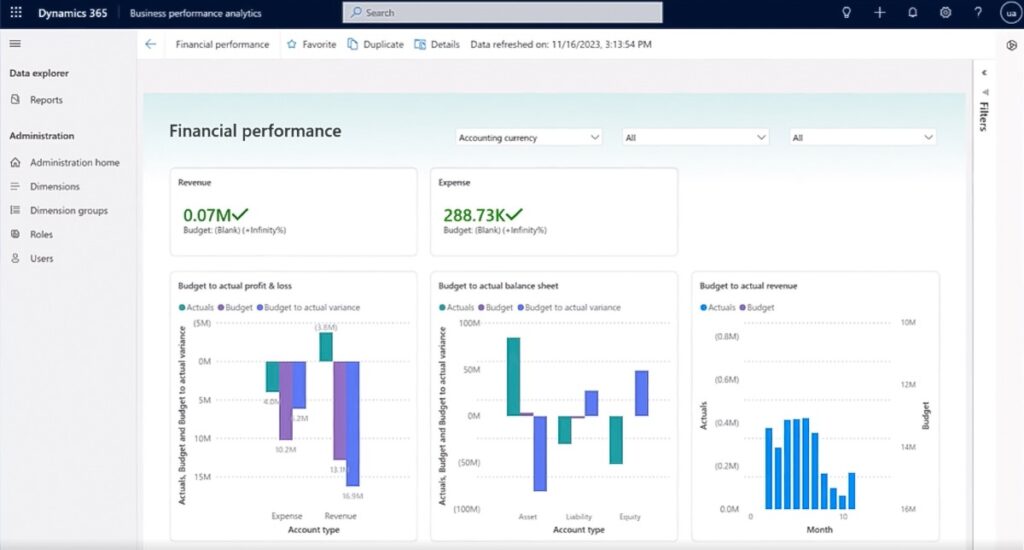
How it helps leaders:
- Connected Data Across Finance and Operations
CFOs gain clear visibility into cash flow and margins; CIOs unify technology and business insights, and CSCOs track inventory and suppliers in real time.
- Real-Time Visibility
They can monitor inventory, demand, and supply chain activities to reduce stockouts, optimize fulfillment, and protect margins.
- Better Planning and Forecasting
They can anticipate customer demand and plan procurement, logistics, and inventory with confidence.
- Smarter Operations
They can streamline procurement, warehouse, and logistics to cut costs and improve service.
- AI-Powered Insights with Microsoft Copilot
With Microsoft Copilot and AI Agents, they gain end-to-end financial clarity and control, from forecasting to closing. It automates reports, runs “what-if” scenarios, and delivers actionable guidance directly in the workflow, helping them act faster and with confidence.
How Connected Systems Make a Real Difference
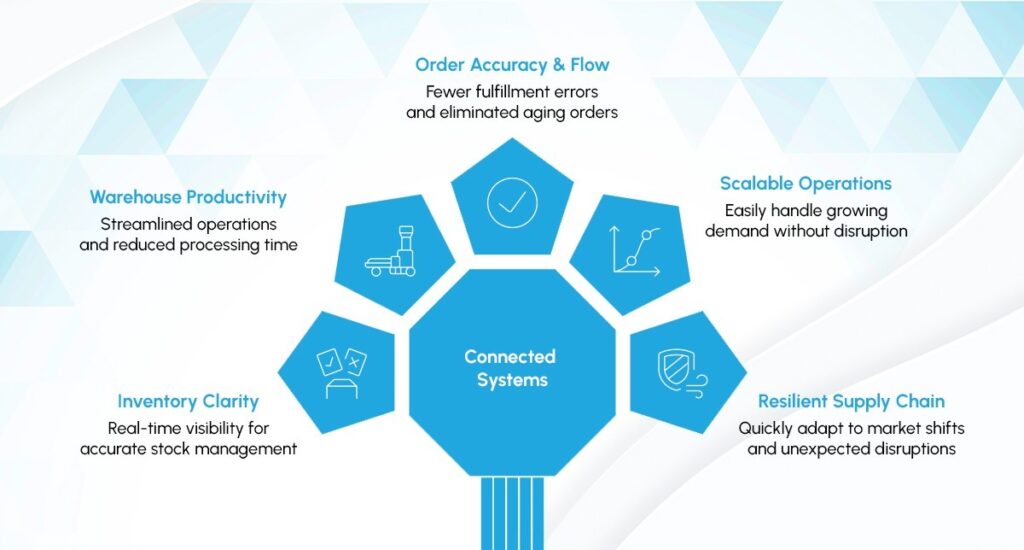
Real-World Case Study:
A well-known UAE retailer leveraged Microsoft Dynamics 365 Finance, achieving:
- Centralization of 12 stores under a single platform
- Inventory processing time reduced from 12–14 hours to 3–4 hours per store
- System uptime increased to ~99.9%”
- Reduced manual tasks and errors
Final Thoughts
Retail leaders can no longer rely on fragmented systems. By connecting finance, operations, and supply chain with Microsoft Dynamics 365 Finance and Microsoft Dynamics 365 Supply Chain Management, organizations bring critical business data into one place.
This gives leaders the visibility and agility they need to respond quickly to demand, costs, and supply chain changes.
Want to see how a unified finance and supply chain platform can support your retail operations? Let’s connect.
FAQs
Dynamics 365 Finance and Supply Chain Management is a cloud-based ERP solution that integrates financial operations with supply chain processes, helping businesses manage inventory, procurement, logistics, and financial reporting in a unified platform.
Retail CIOs adopt Dynamics 365 to improve operational visibility, automate financial processes, enhance supply chain resilience, and enable data-driven decision-making across the enterprise.
The platform provides real-time inventory tracking, predictive demand forecasting, automated procurement workflows, and integrated financial reporting to optimize supply chain performance.
Yes. Dynamics 365 connects financial management with supply chain processes, enabling organizations to track costs, manage inventory, forecast demand, and optimize logistics within a single platform.
Retailers gain improved cost control, faster financial reporting, better demand forecasting, increased operational efficiency, and real-time visibility across business functions.
Categories
- United Arab Emirates
- Retail
- Microsoft Dynamics 365 Finance and Operations
- Finance and Operations
- Dynamics Business Central
- Dynamics 365
- Construction365
- Artificial Intelligence
Recent Posts
- Frontier Transformation in Retail: When AI Moves from Insight to Action
- Top Business Central Features Middle East SMEs Are Using to Pull Ahead
- Retail at the Speed of Now: Overcoming Legacy Limits with D365 Finance & Supply Chain Management
- Getting Real Value from Dynamics 365 F&SCM: Smart ROI Strategies for UAE Retail Businesses
- Beyond Out-of-Stock: The Real Cost of “Blind” Inventory for UAE Retail Brands